
Recycling line
Fiber Opener
Opening machine that loosens compacted fibre and textile waste into an even, free-flowing feed for the machines that follow it.
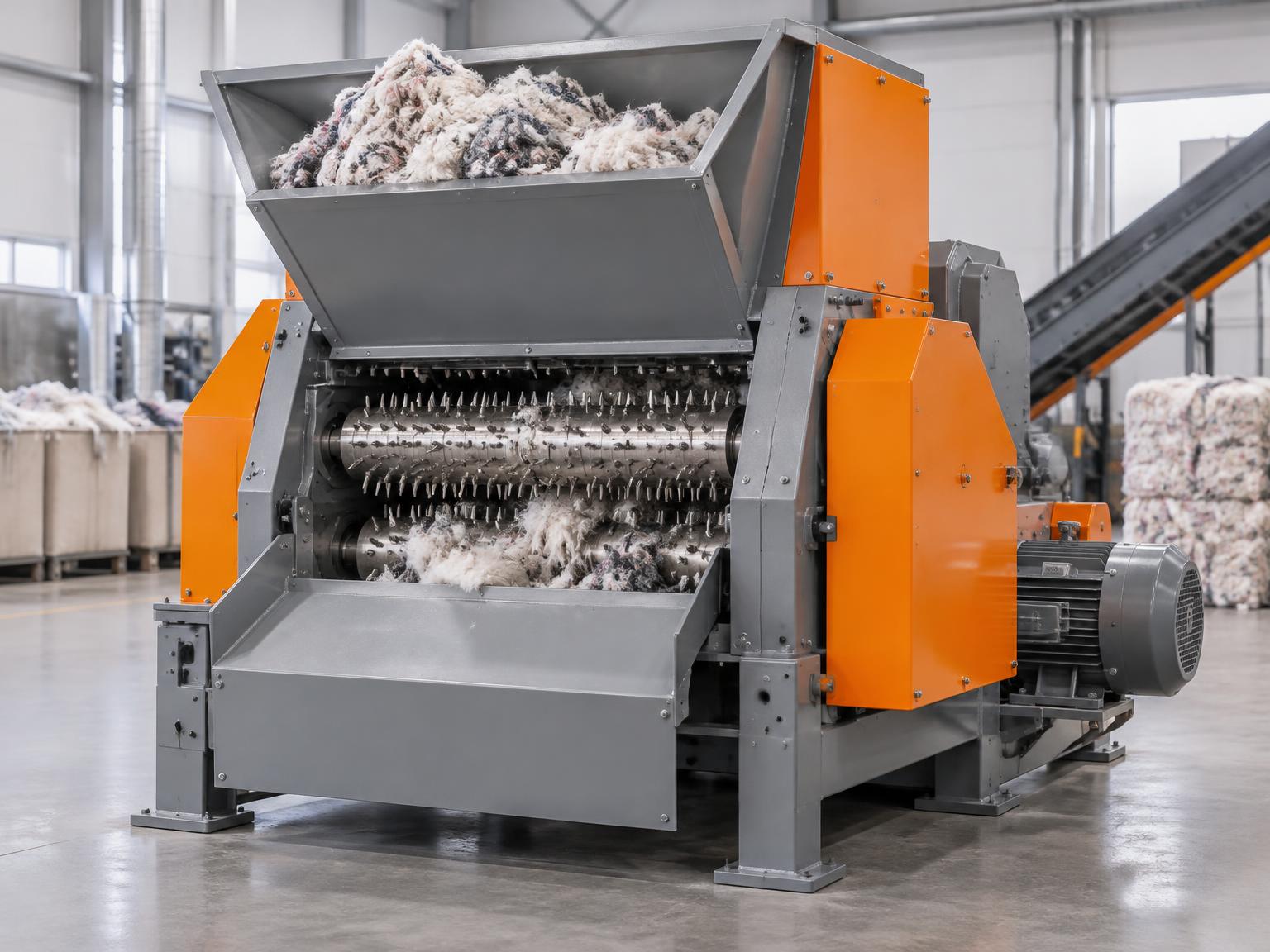
About the Fiber Opener
The Fiber Opener is an opening machine used at the front of a fibre processing or textile recycling line. Its job is to break down compacted material and deliver a loose, evenly distributed feed to the machines that follow.
Because the opener sets the feed quality for the whole line, we engineer it around the material being processed and the throughput of the downstream machines rather than offering it as a fixed catalogue unit. Roller arrangement, working width and drive rating are confirmed at the quotation stage.
The Fiber Opener sits early in a fibre or textile recycling line. It opens compacted material so downstream fine processing and carding receive a uniform feed. Build size, roller configuration and drive rating are engineered per project; confirmed technical values are issued with the quotation.
Fiber Opener — key features
- Opens compacted fibre and textile waste
- Even, free-flowing feed to downstream machines
- Build configured to the material and line layout
- Designed to pair with our fine processing and carding machines
- Fabricated to order in Coimbatore
Applications
- Textile waste recycling lines
- Bast fibre opening
- Feed preparation
- Blending lines
Suitable materials
- Textile waste
- Bast fibre
- Recycled fibre
Technical specifications
The Fiber Opener is engineered per project. Working width, drive rating and output are confirmed with the quotation once your material and target throughput are known — we do not publish indicative figures.
Fiber Opener — frequently asked questions
- Where does the Fiber Opener sit in the line?
- It is used early in the line, before fine processing and carding, so those machines receive an evenly opened feed.
- What technical specifications are available?
- Working width, drive rating and output are set per project. Confirmed values are issued with the quotation once your material and target throughput are known.